📖 Ecology & Evolution
✓ Open Access
February 2026
Indigenous Management Practices to Reduce Pests and Pathogens of Cash Crops in Agroforestry Systems
Campera M., Skull J., Morton L.H., Grant C.A., De Almeida Santos D., Wimble D., Olthoff A., Stenger L., Bowden‐Pickstock J., Setiawan I.M., Maliawan I.K., Sangha A., Chavez J., Garza M., Sleath‐Probets J., Karageorgiadi A., Sadnyana M.D., Ardhiyanto I.P.L. (Taman Nusantara Lestari), Balestri M., Jones A.K., Manson S., Syirazi M., Wibowo Z.A., Nijman V., Bulbert M.W., Jain V., Sukmadewi D.K.T.
Oxford Brookes University · Cornell University · Warmadewa University · Taman Nusantara Lestari, Jembrana, Bali · and others
Abstract
Indigenous farming practices — including traditional agroforestry — can sustain high levels of biodiversity and ecosystem services such as natural pest and pathogen control, especially when integrated with innovation. This study investigated the factors influencing pest and pathogen impact on agroforestry systems among indigenous communities in Bali, Indonesia. Data were collected across 100 plots comparing two systems: community-based forests (where use of agrochemicals is prohibited by social convention) and polyculture agroforests (with no restriction). Crops studied included banana, coffee, cacao, and vanilla. The analysis used generalised additive models with crop richness, canopy cover, and agroforestry type as variables. A key finding was that chemical pesticide and fungicide use made no significant difference to infestation levels — while greater crop diversity actively helped reduce certain pests. The study points to indigenous knowledge and diverse polyculture as effective, chemical-free pathways to crop protection.
🍫
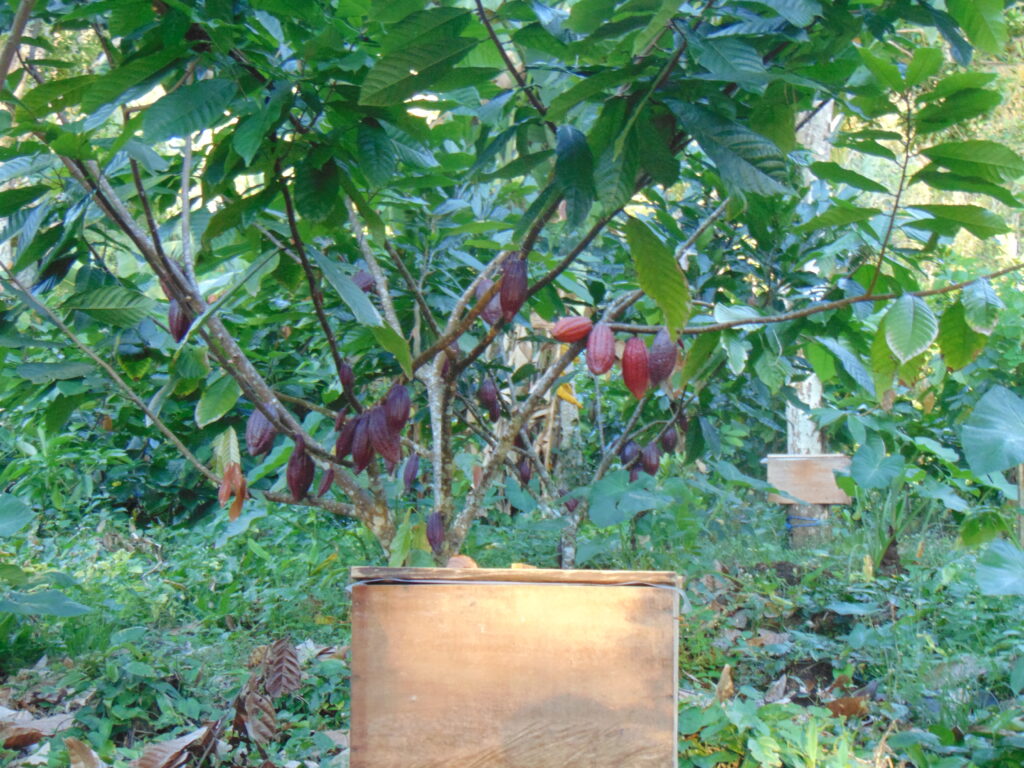
Cacao most affected
63.9% of cacao plants showed black pod disease; 19.4% showed vascular streak dieback
🌿
Vanilla under pressure
30.0% of vanilla plants showed Fusarium stem rot — highlighting the importance of monitoring
☕
Coffee berry borer
9.7% of coffee plants affected, managed effectively without agrochemicals
🔬
Agrochemicals ineffective
No significant difference in pest incidence between chemically treated vs. chemical-free community forests
🌱
Crop diversity helps
Higher crop richness reduced incidence of certain insect pests — validating polyculture agroforestry
📍
Our study sites
Research conducted in Yeh Buah & Kedisan, Jembrana Regency — our operational region
🏢
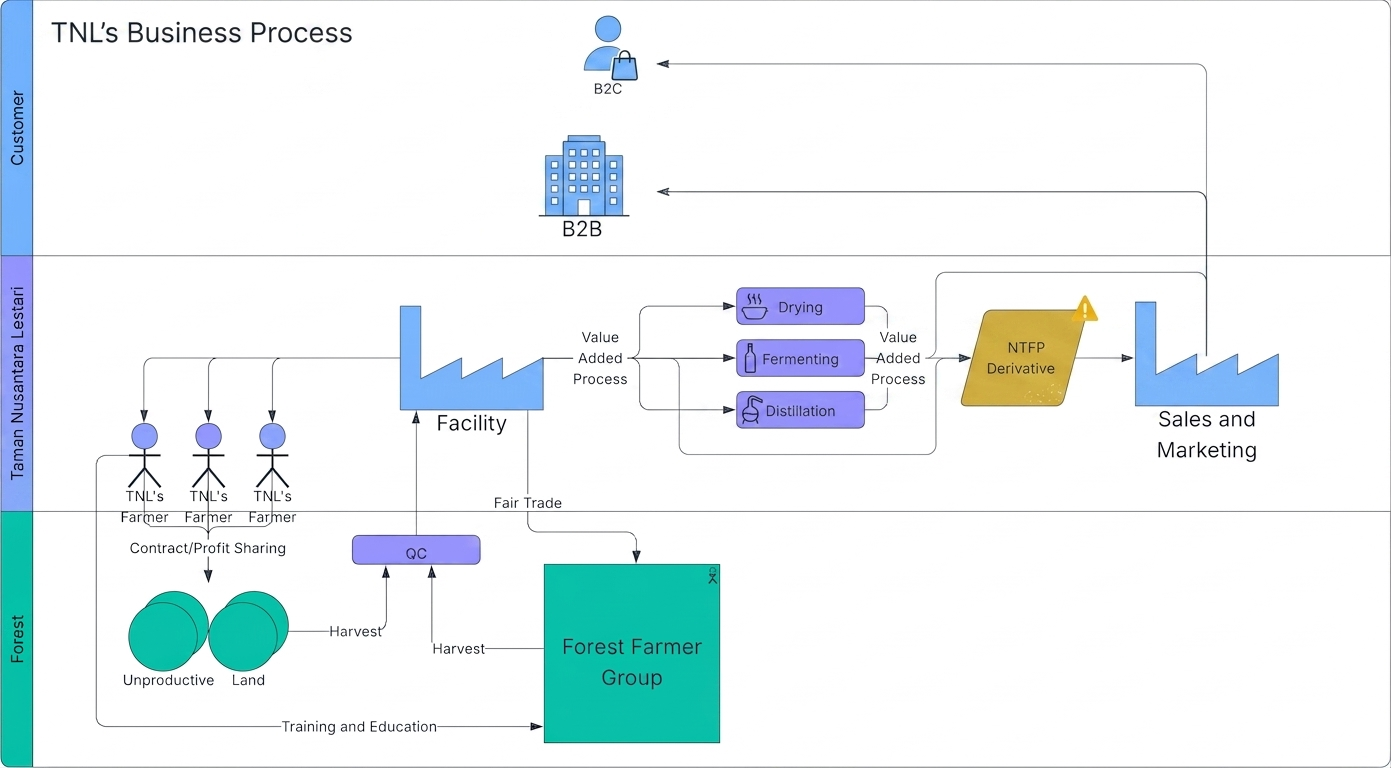
Taman Nusantara Lestari is an affiliated institution on this publication.
Our field sites in Yeh Buah and Kedisan, Jembrana — the same landscapes where we source our vanilla, cacao, and coffee — provided the research grounds for this peer-reviewed study. Science and sustainable commerce, hand in hand.